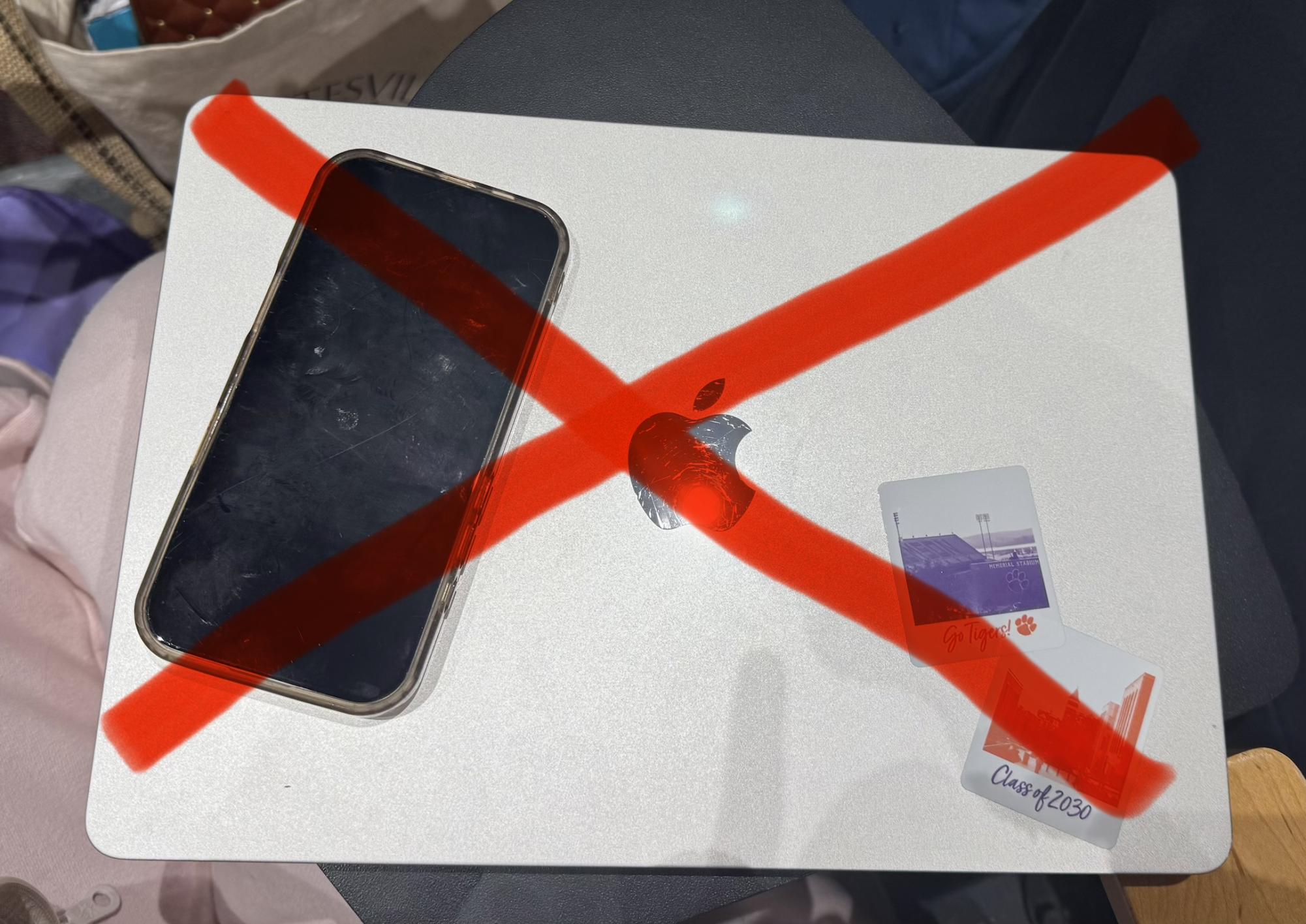
As the 2025-2026 school year begins to wrap up, Bernards teachers and students begin to look to next year. Looking into the future, students can expect new rules regarding their use of technology and devices during the school day. For the 2026-2027 school year, students will now be required to use school-issued Chromebooks and will no longer be allowed to use their phones throughout the school day as a result of recent state laws.
In the past year, students have already had to adjust to new rules regulating their use of devices, as state legislatures mandated that phones must be away during instructional time, prompting the use of “phone jails” or holders that are meant to keep students’ phones until their class concludes. In contrast, for the upcoming year, the state has now passed legislation that prohibits personal internet-enabled devices in schools. Accordingly, the high school is expected to enforce that all students use school-issued Chromebooks and no longer their own laptops, and that they can not have their phones out throughout the school day, not just during instructional time, but in study halls and during lunch.
Bernards principal Dr. Neigel shares thoughts on the implementation of this policy, “ It’s very hard for us to manage laptops when there are some that are laptops or personal laptops and some that are Chromebooks. If they’re all ours, we have software that can manage them better. It also helps a lot for state testing. So, it’s state law, but also convenience.”
With this new policy, there appears to be a sense of understanding from students when it comes to the rules regarding laptops. However, frustration is more apparent when it comes to the stricter limits on phone use throughout the entire school day.
Voicing this concern, Angel Jobiese ‘28 said, “It’s understandable how we can’t use our phones during school, but I hate how we can’t use them during lunch.”
While it is understood that phones can be a distraction or issue during instructional time, the banning of phones all day, including free periods, feels like an overstep, as it limits students’ ability to manage their own time and responsibilities. Having their phones accessible to the students provides them with both independence and a sense of accountability, as they are trusted to balance communication, planning, and appropriate use. While students will still be able to communicate through the phone in the main office, the banning of their personal phones strips students of the immediacy and convenience they provide. This change would not only make everyday coordination more difficult but also reduce opportunities for students to develop decision-making and management skills when it comes to their use of devices.
Reflecting a similar perspective, Gracie Mongo ‘27 said, “I am not happy about it. I use my phone throughout the day to contact my parents and make plans, and figure out the driving situation for after school.”
Students will have access to the office phone as well as their emails on their Chromebooks to contact their parents, but many feel that these options are less immediate and convenient than using a phone.
Ultimately, while these new state regulations were passed with the intent of improving learning and reducing distractions, their enforcement also raises concerns about student independence and communication. The enforcement of these rules will hopefully improve students’ learning within the classroom, but the issue that is raised is that such rules may hurt development outside of the classroom by preventing them from learning how to manage themselves and their phone usage independently.