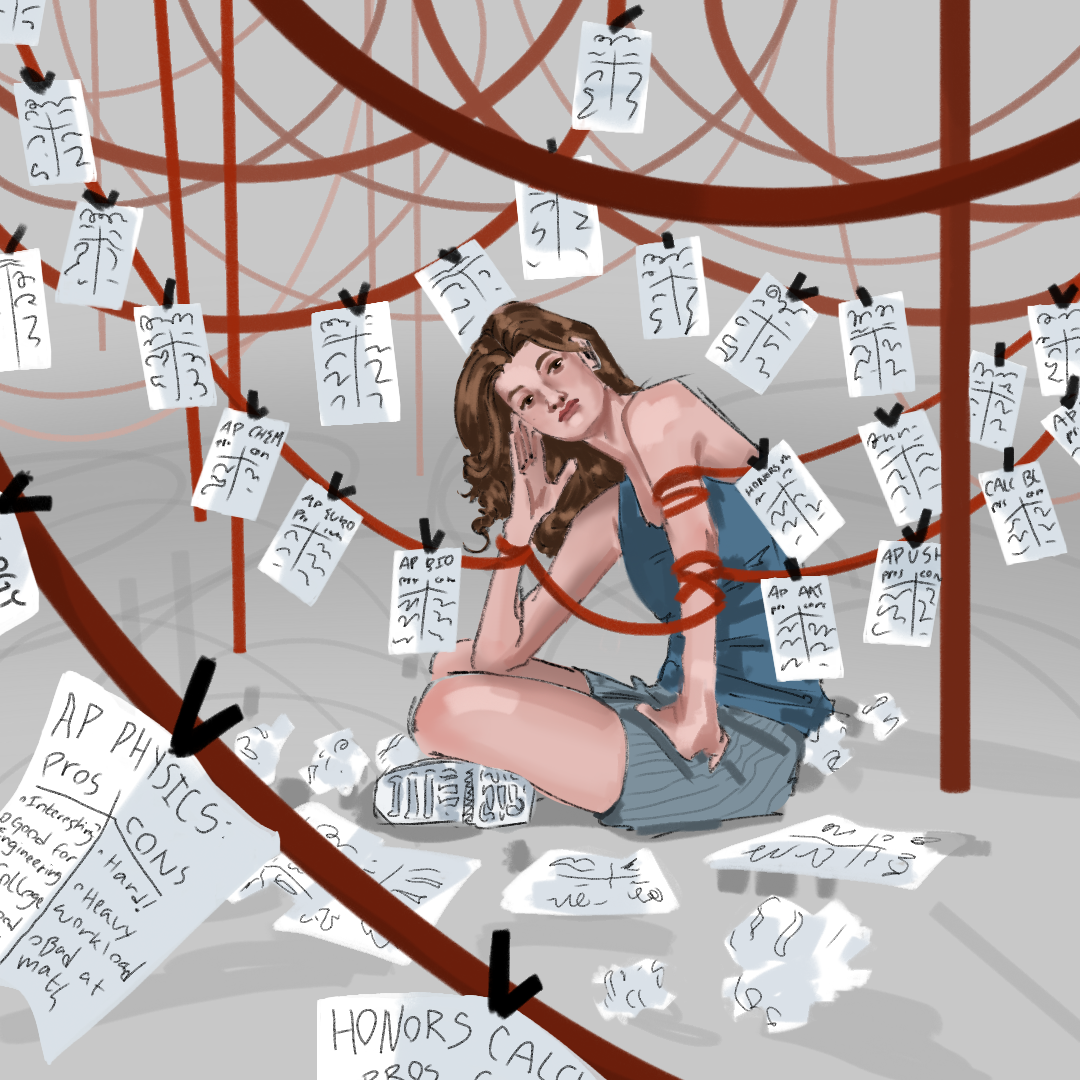
As winter comes to an end, all students’ minds are circling the not-so-distant summer, but before they can dream about sun and the beach, they must go through the dreaded process of scheduling. When scheduling begins, students are given a list of classes, recommendations, and a date by which they must have about 10 courses for the next year planned out. Even though next year feels so far away, scheduling requires students to make decisions that will influence their future, and with so many factors going into picking a schedule, it becomes a very anxious time for students. Scheduling is a stressful time for students at BHS because kids need to make decisions with little context and a lot of things to consider that will affect their future.
Looking ahead causes stress for a great part of the student population, and in different grades, it comes down to more than just that. When scheduling, students decide their courses and the level or difficulty; however, they do not have a say in who their teachers will be. A teacher and their style of teaching can dictate how enjoyable or manageable the class is. Additionally, students are not aware of the syllabus or how the class environment works.
Lucy Rickert ‘29 mentions, “You don’t really get an introduction to who your teachers will be or what the class will be like.”
This applies to students throughout the school who have to go in blindly and decide how they are going to spend the next year of their high school career. There are many students in Bernards High School through either experience or hearing from others who have familiarized themselves with courses, but this does not mean that they are exempt from the stress of scheduling. Many of the students at Bernards think beyond the four years they spend here and ahead to their future years in college. The classes someone takes in junior and senior year do not go unnoticed by colleges; so upperclassmen face the challenge of taking the right classes for colleges and their enjoyment.
Emerson Schroeder ‘27 says, “It is important to pick classes that will challenge me and impress colleges while still being something I will enjoy.”
If students have the goal of going to college, as many do, they are forced to think beyond just what they will enjoy but also what will look good for their future. Scheduling is not just the simple process of picking what classes work best for someone, as it seems that another main cause of stress is the talk around scheduling. People always have and always will talk about classes. After all, the only true way for a student to know what it’s like to take a course is from other students. If a course sounds right for someone but they hear that the class is overly difficult, they are going to feel conflicted and resultantly feel more stress.
Furthermore, students often base what classes they want to take on what their friends take. Students want not only to be in classes with their friends, but also sometimes feel the need to be at the same level. If someone’s friends are taking the course at a harder level, then they might feel compelled to take that level even if it might not be the right placement for them. Additionally, if someone’s friends are taking an easier course, they might want to do the same and convince themselves that the next level is too hard as a result. This conflict in scheduling is one that makes students think beyond just themselves and is another root of the stress at scheduling.
Choosing what classes to take the next year is hard; it forces one to make a decision that will dictate their next year at BHS. On one hand, it is a good thing that students at Bernards care about their academics and want to make the most of their time at high school; however, for students with plenty of other things to worry about, it is important to remember that if a class really does not go well, it can be changed. Additionally, the school is full of resources to help students pick the best schedule for them, and teachers give recommendations based on grade and what they truly think will fit the students. All adults in BHS, including teachers and guidance counselors, are always there to help guide kids to success.
As Ms. Resnick, a guidance counselor at BHS, says, “It is best to maintain a challenging course load without creating a feeling of overwhelm.”
Scheduling is an important time, and it’s important to take it seriously, but this does not mean it needs to be overwhelming.