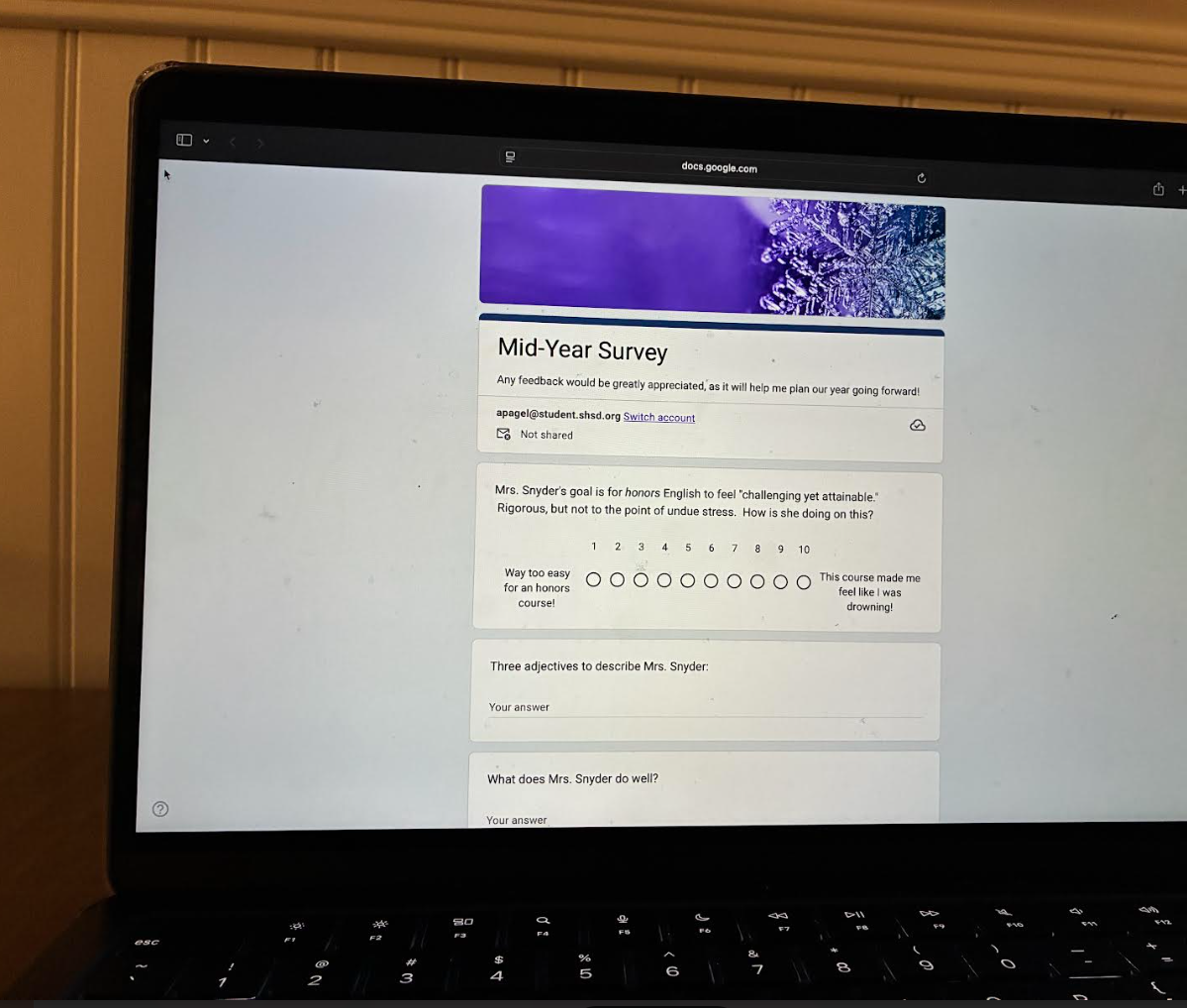
With half of the school year complete, many teachers begin to post midyear surveys. Although not all teachers make the decision to give their students these surveys, many teachers at BHS decide to. The surveys are meant to be tools so the teachers can see how the students feel about the class. But are these surveys worth being honest on, and will they really make any change? The answer to these questions is pretty simple: yes. When used correctly, midyear surveys are a tool that students and teachers should take advantage of.
The overall purpose of teachers putting out these surveys is so they can see how they can improve. Mrs. Snyder, English teacher at BHS who uses these surveys every year, said, “I want to know that what I’m doing is achieving the intended effect and whether I can be doing anything better.”
When she noticed a trend of students replying with concerns about notebook checks, she created a focus group to work with and change the notebook checks in a way so she can still check the skills she needs too but also make them more fair and make the students feel more comfortable with them. This is what the surveys are for: to identify the problem in a classroom environment and fix it. Mrs. Snyder’s class and focus group is a prime example of how if the students speak up and the teacher listens it creates an environment where everyone can thrive, and a platform that encourages these conversations are midyear surveys.
Another teacher who recently put out a midyear survey for the first time in his honors biology class is Mr. Chang, and from this survey, he has begun to install many changes to fit the kids’ needs. He said, “What one would not say to me in person, they say on the survey”.
Mr. Chang is not the only one to notice this trend, as many students have expressed the idea that going up to teachers and criticizing them is simply unthinkable. However, the surveys give the students a safe space to criticize the class and use their voice to change it for the better.
Siena Hill ‘29 said “You get to express your feelings to the teacher in a way you normally couldn’t.” The survey is able to provide a safe space and give the students a place to share their feedback without shying away from the teacher.
The surveys are undeniably there to help, but in order for them to achieve their full potential, the students have to play their part as well. In the end, the teachers can not force nor tell when students are telling the truth. They can add features to encourage truth, like what is working well versus not or making them anonymous. However, it is up to the students to hold up their end of the bargain and take advantage of their opportunity to use their voice. At the end of the day, a teacher can not fix a problem they do not know is there.
Mr. Chang agrees with this as well, saying “If they’re [the students] not giving honest feedback, it is hurting students and teachers.” Although it can be hard for students to criticize their teachers, it is important to remember that the only thing lying will do is keep the teachers from learning.
For students, midyear surveys can be awkward, hard, and even embarrassing at times. For teachers they can be hurtful, confusing, and even a little ridiculous. One thing midyear surveys never are is useless, and if teachers and students are given the opportunity to communicate and improve the class, it is imperative that one takes advantage of it.